
Search info
What Are You Looking For?
Fresh food moves fast. From supplier to receiving dock, through cold storage, onto the sales floor, and out the door — often within hours. At every step, retailers need visibility: What arrived? Where is it now? How long has it been there? Has the cold chain been maintained?
Fresh food’s short shelf life, temperature sensitivity, and complex supply chains make traceability a daily operational requirement. Traditional manual tracking and barcode systems provide fragmented data points — but they cannot deliver the continuous, automated visibility needed to manage expiration dates, batch recalls, and cold chain compliance at scale. RFID closes that gap.
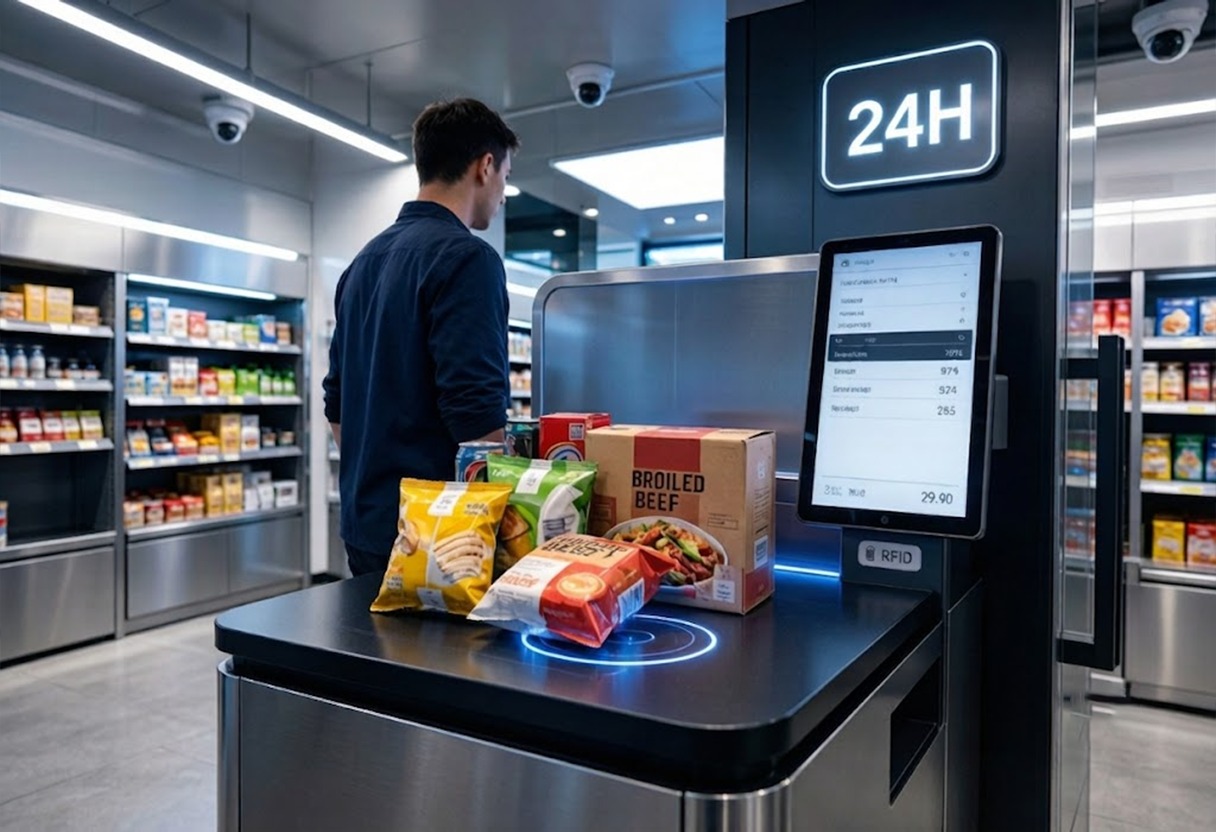
Why Fresh Food Environments Break Generic RFID
RFID hardware specifications — read range, tag read rate, output power — describe performance under controlled lab conditions. Fresh food retail introduces variables that labs don‘t replicate:
Condensation on packaging detunes tag performance
Metal shelving and refrigeration units reflect RF signals, creating dead zones or phantom reads
Temperature cycling (-25°C in cold storage to 25°C on the sales floor) stresses adhesives and circuitry
High-density storage means tags packed closely together, increasing collision risk
Hardware that works in a lab doesn’t always work in a walk-in cooler. Success depends on scenario-fit engineering — not specification sheets.
What Differentiates Hardware Built for Fresh Food
Readers That Maintain Performance Across Temperature Extremes
Fixed readers form the backbone of automated tracking. Installed at receiving docks, cold storage entrances, and sales floor portals, they capture tag data as products move through the facility — without manual scanning.
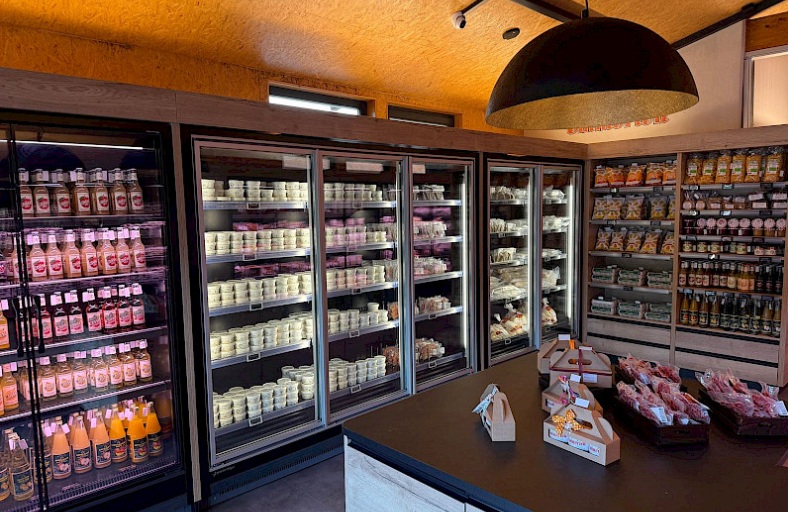
The Symo FR34A/FR38A is built for these conditions. With the Impinj E710 platform, adjustable output power up to 33dBm, and read speeds exceeding 1,000 tags per second, it delivers stable performance from -25°C to 70°C. Four or eight antenna ports enable flexible coverage zone design — critical for navigating metal-rich retail layouts. Support for FCC, ETSI, and CMIIT frequency standards ensures global deplorability.
https://www.seemoreiot.com/product/symo-fr34a-4-port-uhf-rfid-fixed-reader-1
Tags Designed for Food Packaging and Cold Chain
Generic tags fail in fresh food retail because they are not designed for food packaging materials and cold chain conditions. Flexible film, foil-lined containers, cardboard cartons, and moisture exposure all affect performance.
The TL4521r label tag, built on the Impinj M830 platform, is engineered for retail fresh food applications. It supports EPC Gen2V2 and Gen2X protocols, provides 128-bit EPC memory, and maintains read reliability in high-density environments. Roll-fed format enables high-volume encoding and application.
https://www.seemoreiot.com/category/rfid-stickerlabels
For items stored on metal shelves or in foil packaging, flexible on-metal tags resolve RF signal reflection interference, ensuring consistent reads even on challenging surfaces.
Edge Intelligence That Reduces Integration Complexity
Fresh food retailers operate on tight margins and cannot afford extended system integration timelines. Hardware must connect to existing WMS, ERP, and POS systems with minimal custom development.
SeeMore IoT embeds intelligence at the device edge: on-device data filtering eliminates duplicate reads and reduces network load; tag classification distinguishes between product types and batches; anomaly detection identifies read patterns that deviate from expected behavior. This edge-native architecture reduces cloud dependency, lowers latency, and accelerates integration.
The Outcome: Visibility That Pays for Itself
Retailers deploying RFID fresh food traceability report measurable improvements:
Inventory accuracy rises as automated reads replace periodic manual counts
Waste decreases as real-time expiration tracking enables dynamic markdowns
Recall response accelerates from days to hours with batch-level traceability
Cold chain compliance strengthens with auditable timestamps at each transition
Labor efficiency increases as staff shift from scanning to exception management
The technology has matured beyond proof-of-concept. RFID is now a proven tool for fresh food traceability — but only when the hardware is designed for the operational realities of retail environments.
SeeMore IoT designs for that reality.

Tel : +8618682338756
Email : info@seemoretek.com
Whatsapp : +8618682338756


© 2026 SeeMore IoT Technlogy Co.,Ltd. All Rights Reserved.